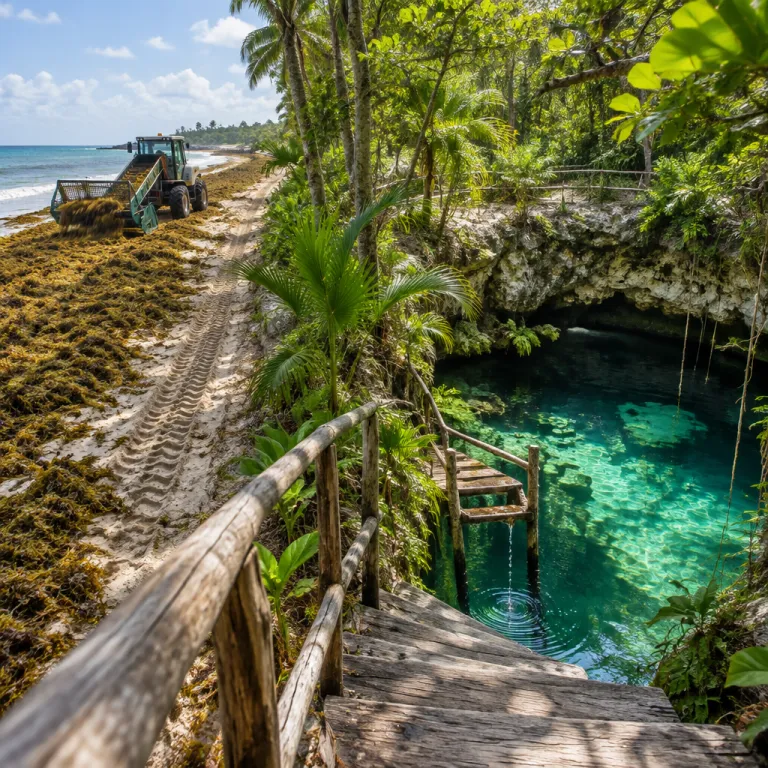
Why tulum cenotes rescue a seaweed soaked beach holiday
On some mornings in Tulum, the first thing you smell is sargassum, not salt. The beach faces open Atlantic water with no protective barrier reef, so this stretch of Tulum México takes the seaweed harder than much of the Riviera Maya and families see their perfect turquoise ruined by brown foam. That is exactly when the inland world of cenotes Tulum quietly becomes the best part of the trip.
A cenote is a natural sinkhole where limestone collapsed into the underground cave and river system and the result is fresh water so crystal clear it looks backlit. These cenotes and caves sit inland, so sargassum never reaches them and the water stays stable in both temperature and clarity all season, which matters when you have kids who hate surprises. Gran Cenote, Dos Ojos and the Yal Ku lagoon near Akumal all lie roughly 15 to 30 minutes from Tulum along the main road and remain completely untouched by seaweed even on the worst beach days.
Think of a cenote day not as a consolation prize but as a reset. While other travelers argue with front desk staff about the beach conditions in Tulum México, you will be floating under vines with fish flickering around your ankles and your children learning that the best water is sometimes underground. The contrast is sharp enough that many families end up calling these inland dives and swims the best days of their entire Mexico stay.
Reading the morning seaweed report and pivoting like a local
Before you promise the kids a beach day, step outside your hotel and actually look at the shoreline. If the line of sargassum is thick, the waves are choked and the smell is strong, accept that Tulum’s open Atlantic exposure has won and you should pivot inland. This is when tulum cenotes become your secret weapon rather than a backup plan.
Most family friendly hotels in Tulum México now check regional sargassum reports at breakfast and staff will quietly suggest cenotes when the beach looks rough. Take that hint, ask the front desk for a printed map of cenotes Tulum along the main road and decide whether you want an open swimming hole, a semi covered cave or a gentle lagoon style cenote for younger children. Because cenotes are inland and fed by underground rivers, their water remains crystal clear all year while the seaweed problem stays strictly on the beach.
Once you decide to go underground, logistics are simple. You will either book a taxi or pick up a rental car and pay the modest rental fees for a day, then head toward Gran Cenote, Cenote Calavera or Dos Ojos depending on your family’s mood. Keep your plans flexible, because if one entrance looks crowded with tour buses you can drive a few minutes farther and try another cenote entrance with a lower entrance fee and calmer water.
Three cenotes, three moods: matching families to the right water
Gran Cenote, sometimes written as Grand Cenote, is the crowd pleaser that most first timers in Tulum México hear about. The entrance fee is higher than at smaller spots, but the payoff is a wide open pool of crystal clear water, easy stairs, life jackets and a shallow shelf where even nervous swimmers can sit while turtles glide past. For families who want the best cenotes for simple swimming rather than serious diving, this is often the right first stop.
Dos Ojos, often called Cenote Dos Ojos, is a different mood entirely. Here the cenote is split into two deep blue eyes connected by a cave system, and the atmosphere suits older kids who want to snorkel into darker corners or try guided scuba diving in the caverns. You will pay an entrance fee in pesos at the main road gate, then either walk or take a small shuttle deeper into the jungle where the cenotes and dive platforms sit under dense trees.
Cenote Calavera, just off the main road from Tulum toward Cobá, feels like a secret even when it is busy. The cenote is essentially a cave shaft with three holes in the roof, so braver visitors climb a ladder and jump while others use the wooden stairs to slip into the cool water. Parents can sit at the edge of the cave entrance watching older children dive while younger ones float near the ladder, and the whole scene feels like a casual backyard pool party rather than a polished attraction.
Beyond the big names: casa cenote, lagoons and day trip pairings
Once you have ticked off Gran Cenote and Dos Ojos, it is worth exploring the quieter edges of the cenote map. Casa Cenote, set between Tulum and Playa del Carmen near the coast, is a long narrow cenote that feels like a jungle river with mangroves arching over water so crystal clear you can see every root. Families who like gentle current and easy snorkeling will appreciate that Casa Cenote connects the underground system to the sea while still staying sheltered from sargassum.
If you are based in Tulum México but curious about the wider region, you can pair cenotes with small town stops. Drive north toward Playa del Carmen and Puerto Morelos and you will pass side roads leading to less famous cenotes where the entrance fee in pesos is lower and the rental fees for life jackets and lockers feel more reasonable. Some travelers combine a morning at a cenote near Playa del Carmen or just off the road to Puerto Morelos with an afternoon stroll through Playa del Carmen’s quieter back streets, avoiding the busiest parts of Quinta Avenida.
Further afield, families sometimes plan a loop that includes Suytun Cenote near Valladolid or the photogenic Cenote Kil on the way toward the interior, though these are longer travel days from Tulum. These cenotes are not part of the immediate cenotes Tulum cluster, but they show how the same underground water system shapes much of southeastern Mexico. If you prefer to stay closer, Yal Ku lagoon near Akumal offers lagoon style calm water that feels like a natural pool and works beautifully for younger children who find caves intimidating.
Practical planning: fees, gear and choosing the right hotel base
Money first, because cenote costs add up faster than people expect. Every cenote charges an entrance fee in pesos, and popular spots like Gran Cenote, Cenote Calavera and Dos Ojos also add rental fees for life jackets, lockers and sometimes snorkel gear. For a family of four, you should expect that a full cenote day around Tulum México will cost roughly the same as a low key beach club day once you include transport, food and gear.
Most cenotes Tulum require biodegradable, reef safe sunscreen and ask you to shower before entering the water, which keeps the cenote completely free of oily films. Bring your own masks and snorkels if you plan to dive or snorkel more than once, because rental fees for basic gear can feel steep after a few days. Water shoes help on rocky steps, and a light rash guard keeps kids warm during long swims in the cool cave water, which usually sits around 24 degrees Celsius.
Where you sleep shapes how easy these days feel. Families who stay in Tulum town rather than directly on Playa del Tulum are closer to the main road and can reach cenotes like Gran Cenote, Cenote Calavera and Casa Cenote faster, often before the tour buses arrive from Playa del Carmen or farther up the coast. If you are torn between beach and town, read a detailed guide on how Tulum’s beach clubs shape your hotel stay so you understand when a cenote day will save you from both sargassum and overpriced loungers.
FAQ
Are cenotes affected by the same seaweed that hits Tulum’s beaches ?
No, cenotes are inland and completely separate from the open sea. The sargassum that piles up on Playa del Tulum never reaches the underground river system, so the water in cenotes Tulum stays crystal clear all season. This is why a cenote day is the most reliable backup when the beach turns brown.
Which cenote is best for young children who are not strong swimmers ?
Gran Cenote and Yal Ku lagoon near Akumal are usually the best options for younger kids. Both offer shallow entry areas, calm water and mandatory life jackets, which make parents feel more relaxed. Avoid deeper cave focused spots like Cenote Calavera or the darker sections of Dos Ojos until children are confident in the water.
How early should we arrive to avoid crowds at popular cenotes ?
Arriving within the first hour of opening is the single best strategy. Tour buses from Playa del Carmen and other towns usually roll in late morning, so early swimmers enjoy quieter water and easier parking. This timing also lets families leave for lunch and naps just as the midday rush peaks.
Do we need a guide for cenote diving or can we go alone ?
For simple surface swimming and basic snorkeling, you do not need a guide and can explore marked areas independently. For any cavern or cave scuba diving, local rules require that you go with a certified guide who knows the routes and safety procedures. This is especially important at complex systems like Dos Ojos or Casa Cenote where currents and overhead environments demand experience.
What should we pack for a full cenote day from our hotel in Tulum ?
Bring cash in pesos for each entrance fee and any rental fees, plus towels, reef safe sunscreen and water shoes. A dry bag for phones, snacks for children and your own snorkel masks will make the day smoother and cheaper. Many families also pack a light change of clothes so they can head straight to dinner in Tulum town after swimming.
Sources
Atastefortravel.ca ; Howisthesargassum.com ; Official tourism information from the Quintana Roo tourism board.