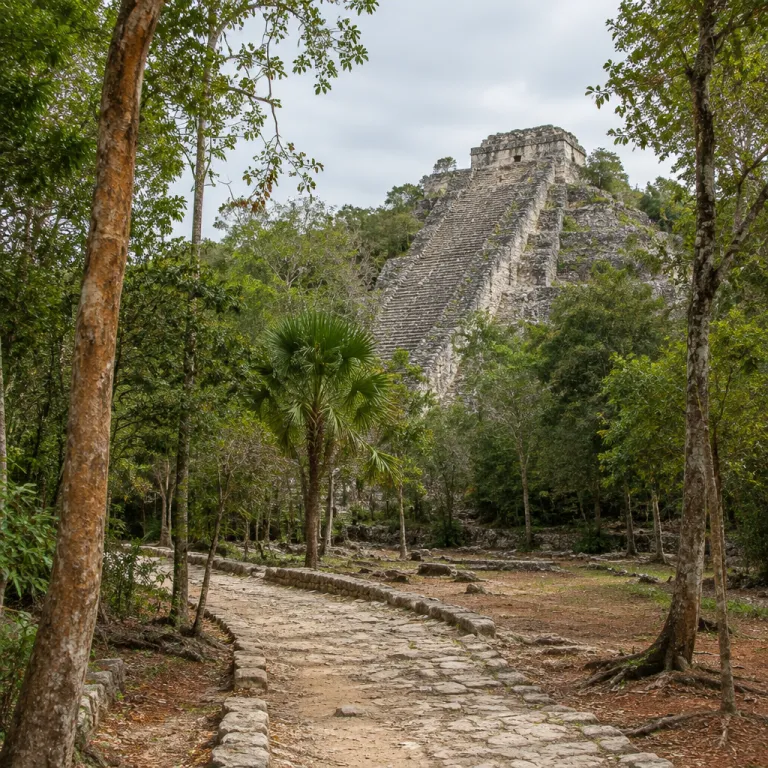
Why Cobá beats the classic Chichén Itzá tour from Tulum
For travelers weighing the best things to do in Tulum, the default ruins tour still points toward Chichén Itzá. Yet the long day on a crowded bus from Tulum town or from a hotel on Tulum beach rarely matches the fantasy you had when you booked the trip. If you care more about climbing a pyramid, swimming in a cenote and being back at your beach club by late afternoon, Cobá quietly wins.
Cobá sits about 45 km inland from Tulum in Quintana Roo, which means the drive typically takes around 45 minutes by car rental or private transfer, depending on traffic and roadworks. Chichén Itzá, by contrast, lies roughly 150 km away and usually takes about 2–2.5 hours each way from México Tulum, turning a simple ruins visit into a full day trip with little flexibility. When you are planning several day trips during a longer stay in Tulum, that time difference shapes the entire rhythm of your holiday.
Travel insiders in Tulum consistently rate Cobá as the perfect compromise between access and atmosphere, especially for digital nomads balancing work hours with exploration. The Cobá archaeological area feels woven into the jungle, with shaded paths and birdsong instead of constant loudspeaker commentary. You still get the sense of scale and history that people expect from México, but without sacrificing your whole day or your Tulum budget on a single excursion.
Climbing Nohoch Mul: the last great pyramid ascent near Tulum
The single most persuasive reason Cobá tops many lists of things to do around Tulum is simple: you can still climb. Nohoch Mul, the main pyramid at Cobá, rises about 42 m above the jungle canopy, reached by roughly 120 steep steps and a wooden staircase that concentrates the ascent. Standing at the top, you look out over unbroken green rather than parking lots and tour buses, which is what many visitors now associate with Chichén Itzá.
Official rules about access can change, so always confirm locally before you go, but recent on-the-ground reports still answer the key question many travelers quietly hope to ask: “Can you climb a pyramid at Cobá?” For now, Nohoch Mul remains climbable via the wooden staircase, making Cobá one of the very few Maya ruins in México where the physical act of ascending a pyramid is still part of the experience. For many guests staying in a hotel along Tulum beach, that climb becomes the defining story of their trip to Tulum, not another distant photo of a roped-off monument.
From the summit, you see how the archaeological area dissolves into lagoons, jungle and distant villages, a view that feels both beautiful and slightly vertiginous. The steps are worn and the sun is fierce, so bring plenty of water and wear closed-toe shoes rather than flimsy playa sandals. If you are curating a personal bucket list of ruins day trips from Tulum town, this is the one ascent that still feels raw, physical and worth every drop of sweat.
For readers who want a refined travel guide to pair with this kind of active day, look at this curated overview of elegant things to do in Tulum for hotel guests. It helps you balance a demanding ruins climb with slower evenings at a beach club or in Tulum town. That balance is what turns a standard trip into something that feels quietly luxurious, even on a careful Tulum budget.
Time, cost and crowds: Cobá versus Chichén Itzá for Tulum day trips
When you compare Cobá and Chichén Itzá as options for a ruins excursion from Tulum, the numbers tell a clear story. Cobá usually sees a few thousand visitors a day, while Chichén Itzá often absorbs well over twice that number in the same period, which changes how both sites feel on the ground. At Cobá you still share the ruins, but you can pause under trees, hear the wind and actually frame the pyramid without a sea of umbrellas.
Chichén Itzá remains a legitimate bucket list stop, especially for a first Yucatán trip or for travelers fascinated by large-scale ceremonial architecture. Yet the standard Chichén Itzá tour from México Tulum usually means a pre-dawn pickup, many hours of highway, obligatory shopping stops and a rushed cenote swim on the way back. Full day trips there often cost between US$65 and US$95 per person, which can be a significant slice of a Tulum budget if you are staying several weeks.
By contrast, Cobá works beautifully as a half-day trip from any hotel in Tulum town or along Tulum beach, leaving time for a late lunch at a beach club or a sunset swim. You can reach the ruins by car rental, by colectivo or on a small-group tour, then rent a bike or pedicab inside the archaeological area to explore the different clusters of structures. “How long does Cobá take from Tulum? About 45 minutes’ drive, half or full day depending on activities” — that flexibility is exactly what digital nomads and remote workers need when they are planning several trips from Tulum around their work calls.
If you are pairing ruins with underwater exploration, consider structuring one of your later day trips around this guide to elegant ways to enjoy scuba diving in Cancún from your Tulum hotel. That combination of jungle archaeology and Caribbean water keeps your list of things to do near Tulum varied without feeling frantic. It also helps you decide which days should be early starts and which will be reserved for slow mornings on the beach.
How to structure a Cobá and cenote day from your Tulum hotel
The most satisfying Cobá itinerary starts and ends with the sea, which is why it ranks so high among the best things to do in Tulum for guests staying near the playa. Leave your hotel around 7:00, reach the Cobá ruins close to opening and walk or cycle the shaded paths before the heat builds. Inside the site, bike rentals and pedicabs turn what could be a long trudge into a relaxed tour through the jungle area, with time to stop at smaller structures before tackling Nohoch Mul.
After the climb, head for one of the nearby cenotes, where cool fresh water erases the dust and effort of the pyramid steps. Many travelers pair Cobá with a cenote on the same road back toward Tulum town, which keeps the driving time short and the day trip compact. This pattern works especially well in September, when the air is heavy and a mid-day swim feels less like a treat and more like a necessity.
Back in México Tulum by mid-afternoon, you still have time for a late lunch at a low-key beach club or a taquería in town, depending on whether you are based closer to Tulum beach or the inland grid. That is the quiet luxury of Cobá: you get a full ruins experience, a cenote swim and still make it back for golden hour on the beach without feeling rushed. For many long-stay guests, this becomes the template for other trips from Tulum, mixing one focused activity with generous unscheduled hours.
If you are curious about weaving in cultural experiences beyond ruins and water, read this thoughtful piece on how to witness Día de Muertos and Janal Pixan in Tulum respectfully. It shows how a careful travel guide can help you approach local traditions with the same care you bring to natural sites. That mindset will serve you well whether you are exploring Cobá, swimming in a cenote or choosing which beach clubs deserve your time and money.
When Chichén Itzá still makes sense and how to do it well
For all the arguments in favor of Cobá, Chichén Itzá still holds a certain gravitational pull among the things to do in Tulum. If this is your first trip to México or your lifelong bucket list includes that iconic stepped pyramid, skipping it entirely may feel wrong. In that case, the goal is not to avoid Chichén Itzá, but to approach it with a strategy that respects your time, your energy and your Tulum budget.
“Is Chichén Itzá too far for a day trip? Yes; it takes roughly 2–2.5 hours each way, many hours on the road.” That does not mean you should never go; it means you should be deliberate about when and how you visit. A private or small-group tour that leaves Tulum town before dawn, reaches the ruins at opening and then continues to a quieter cenote can still feel like a guide’s best-case scenario, especially if you are staying several nights and can afford one long, structured day.
Think of Chichén Itzá as the grand theatre piece and Cobá as the rehearsal space where you can still touch the set. At Chichén Itzá you will not climb, you will share the site with large groups and you will probably pay more, but you will also see carvings and structures on a scale Cobá does not match. For many travelers, the ideal sequence is to stay in Tulum for a week or more, take one focused day trip to Cobá with a cenote and then, only if the desire remains strong, commit to a single, well-planned Chichén Itzá excursion.
Back at your hotel on Tulum beach after either ruins day, the contrast between the quiet Caribbean water and the dense history inland will feel sharp. That contrast is part of what makes México Tulum such a compelling base for multiple day trips in different directions. In the end, what stays with you is rarely the drone shot of a famous pyramid, but the walk back through the jungle at Cobá, shoes dusty, shirt damp, the beach still an hour away and the whole evening open.
FAQ about Cobá, Chichén Itzá and Tulum ruins day trips
Is Cobá or Chichén Itzá better for a first time visitor to Tulum?
Cobá is better if you want a shorter travel time, fewer crowds and the chance to climb a pyramid, which makes it ideal for many people planning several things to do in and around Tulum. Chichén Itzá is better if your bucket list focuses on seeing one of the most famous ruins in México, even if that means a longer day trip. Many travelers staying in a hotel along Tulum beach choose Cobá first, then decide later whether Chichén Itzá still feels essential.
How do I get to Cobá from Tulum on a budget?
For a tighter Tulum budget, the most economical option is usually the colectivo from Tulum town toward Cobá, which runs regularly during the day. Car rental offers more flexibility if you want to combine the ruins with several cenotes or small towns in one of your trips from Tulum. Small-group tours can also be good value when they include entrance fees, water and a cenote stop in a single price.
Can I visit a cenote and Cobá in the same day?
Yes, pairing Cobá with a cenote is one of the best things you can do with a single free day from Tulum. Many cenotes lie along the road between Tulum and Cobá, which keeps driving times short and the overall tour relaxed. This combination gives you ruins in the morning, cool fresh water at midday and time to return to a beach club or your hotel by late afternoon.
What should I wear and bring for a Cobá ruins visit?
Wear light clothing, closed-toe shoes suitable for uneven stone steps and a hat, because the top of Nohoch Mul is shadeless. Bring at least one and a half litres of water per person, sunscreen, insect repellent and cash for entrance fees, bike rentals and snacks. If you plan to swim in a cenote after the ruins, pack a swimsuit, a quick-drying towel and a dry change of clothes for the ride back to Tulum beach or Tulum town.
Is Cobá suitable for remote workers staying several weeks in Tulum?
Cobá works very well for digital nomads and remote workers who stay in Tulum for longer periods, because it fits into a half-day window. You can leave after an early morning call, visit the ruins and a cenote, then be back at your hotel with reliable Wi-Fi by late afternoon. That balance makes Cobá one of the most practical things Tulum offers for people blending work and travel.